
Native grape varieties
of the Mediterranean
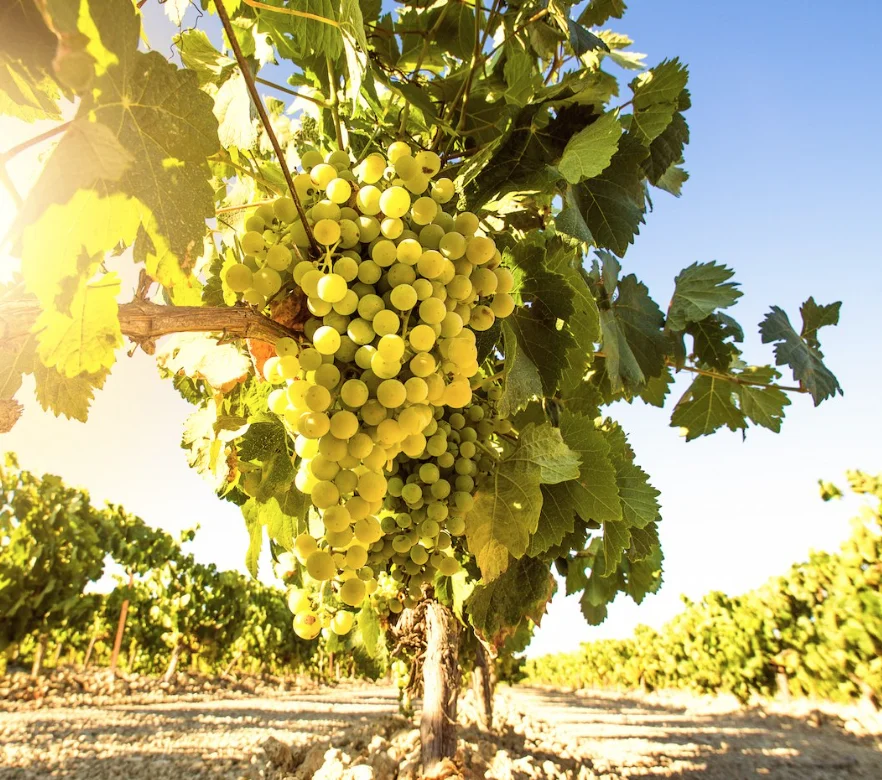
Monastrell, Bobal, Giró, Verdil, Merseguera, Mandó and more than 30 native varieties with a full ampelographic profile: origin, viticultural traits, oenological potential and the natural-wine producers who work with them. Many are in active recovery, some almost forgotten.

No variety matches these filters.
A historic window
for varietal recovery
More than 100 grapevine varieties were grown in the Comunitat Valenciana before phylloxera. This varietal heritage has shrunk enormously: through the need to graft onto resistant rootstocks, through urban speculation and through the mass introduction of high-yield global varieties. Since 2015, COMAV (UPV) has molecularly identified 80 distinct varieties across more than 350 accessions analyzed.
Other varieties documented in the Mediterranean territory
Varieties present in the ampelographic record of the Valencian Country and the Mediterranean for which we don't yet have a complete profile. We include them here for their heritage relevance, their connection to the territory, or their interest for minimal-intervention viticulture.
Palop
Autochthonous Valencian · Marina Alta · Maestrat · IbizaDocumented in the Valencian Country since 1569, it exists in white, black and pink variants. Coarse-grained grape with firm skin, traditionally used for both table and wine. The Conselleria lists it as a synonym of Valencí Blanc, and García Muñoz's (2011) SSR analysis confirms the Palop-Beba identity. We keep it as a separate entry as a local Valencian designation still awaiting full confirmation across all accessions.
Alarije
Other Iberian regions · Extremadura · IGP CastellóWhite variety from Extremadura known in the Valencian Country as Subirat or Malvasía Riojana, authorized by IGP Castelló. Genetically it is a variety distinct from the traditional Mediterranean Malvasia, despite historical confusion over names. First Valencian record from 1417. 1 accession at the Conselleria CV.
Moravia Dolça
Other Iberian regions · Utiel-Requena · Castilla-La ManchaAlso known as Crujidera, a name made official by RD 461/2011 (Moravia Dulce or Crujidera). Grown in Requena, Utiel and Camporrobles, in clear decline since the late 20th century. 6 Conselleria accessions, first recorded in 1807. A greenish-white variety with late ripening and good natural acidity, of interest for minimal-intervention wines in a continental climate.
Callet
Balearic Islands · Western MediterraneanNative red from Mallorca, a structural variety of Balearic viticulture and present in the Terroir Radical catalogue for its Mediterranean connection to Valencian varieties. Long cycle, good acidity, spiced profile and ripe red fruit. The wineries of Felanitx and the Pla de Mallorca produce its most genuine expressions, many in natural or biodynamic viticulture.
Graciano
Other Iberian regions · IGP Castelló · Utiel-RequenaAlso known as Morrastel. Native to La Rioja and Navarra, present in Utiel-Requena and authorized by IGP Castelló. High acidity, intense color and great ageing potential. Often confused in the field with Monastrell. Highly valued in natural winemaking for its natural freshness in warm climates.
Pampolat
CV · Alt PalànciaStrictly native to the Alt Palància, pre-phylloxera. Preserved at the Botanical Garden of Valencia and replanted since 2019.
Mondragón
CV · Alt PalànciaThe least documented of the three recovered in the Alt Palància. It does not appear in the VIVC or in the Spanish national registry.
Moscatell de l'Estambul
CV · Southern AlicanteNative muscat from southern Alicante (Elche), also known as Grumer Moscatel. A cross between Moscatel de Alejandría and Valencí blanc. First recorded in 1878.
Parrel
CV · Baix VinalopóKnown locally as Cabezo Rubio. Native to the Baix Vinalopó, under recovery by DOP Alicante. It contributes intense ruby color and surprisingly high acidity.
Ferrandella
CV · Autochthonous ValencianFirst documented in 1460. A native Valencian variety of very limited distribution, awaiting a complete ampelographic study.
Montalbana
CV · Autochthonous ValencianFirst recorded in 1362, one of the oldest in the Comunitat Valenciana. Native white under recovery.
Blanquet
CV · Autochthonous ValencianDocumented in the Valencian Country since 1791. A local native white of very restricted distribution.
Gateta
CV · Autochthonous ValencianDocumented in the Valencian Country since 1791. A red variety of very limited distribution, preserved in Conselleria accessions.
Verdosilla
CV · CastellónNative Valencian white historically present in Castellón. Awaiting a thorough genetic study.
Coloraíllo
CV · Inland ValenciaNative Valencian variety under active recovery in inland Valencia. A red with a medium cycle.
Cor d'Àngel
CV · AutochthonousA new variety in the Vitis International Variety Catalogue (Gisbert et al., UPV-COMAV). Ampelographic profiling under way.
Esclafagerres
CV · AlicantePre-phylloxera native variety from the Alicante area. Scarce and at an early stage of recovery.
Planta Mula
CV · AlicanteDocumented in Alicante since 1811. A white of very restricted distribution, preserved in the Conselleria's registry.
Picapoll blanc
CV · Xixona · Frontera V-ANative to Xixona and the southern part of the Valencia-Alicante border. Distinct from the Catalan Picapoll blanc despite sharing the name.
Pàmpol rodat
CV · Balearic IslandsDocumented in the Valencian Country and the Balearic Islands since 1791. A variety of discontinuous, scarce distribution.
Morsí
CV · MediterraneanNative Valencian variety with a confirmed synonymy to Morocco's Sbaa Tolba, evidence of shared Mediterranean winegrowing heritage. Under recovery in scattered locations.
Raïm del Clotet
CV · AutochthonousA new variety in the Vitis International Variety Catalogue (Gisbert et al., UPV-COMAV). Awaiting a complete oenological characterization.
Blanca de Tollo
CV · InteriorRescued in areas of inland Comunitat Valenciana. Scarcely documented, preserved in local accessions.
Pampanat
CV · AutochthonousCharacterized by the large size of its green leaves. Limited ampelographic documentation.
Escanyavella
CV · Maestrat · VinaròsPre-phylloxera white from the Maestrat and the Vinaròs-Traiguera area. Wines of marked acidity and understated aroma.
Trobat
Catalonia · Lleida · PyreneesAncestral red variety from the comarcas of Lleida and the Catalan Pyrenees. Light, fresh wines, very interesting in mountain viticulture.
Moscatel Serrano
Catalonia · Lleida Pre-PyreneesWhite from the Muscat family typical of high-altitude Catalan areas. Intense floral aromas with good mountain acidity.
Selma blanca
Catalonia · PenedèsPre-phylloxera white discovered in the year 2000 on Família Torres' Aiguaviva estate. Awaiting final authorization.
Lledoner pelut
Catalonia · MediterraneanA downy biotype of red Garnacha (Grenache), with leaves and bunches covered in whitish down. Wines of similar structure to Garnacha but with more body.
Querol
Catalonia · Alt Camp · PenedèsRed from the Querol area (Alt Camp), in the same recovery setting as Moneu and Gonfaus. An oenologically little-studied variety.
Garró
Catalonia · Garraf · PenedèsThe first variety recovered by Bodegas Torres, located in the mid-1980s on the terraces of the Garraf. A documented synonymy with the Valencian Viognier.
Cuatré
Catalonia · Balearic IslandsMountain red variety for cool climates, present in Catalonia and the Balearic Islands. Short cycle, good acidity.
Vinyater
Catalonia · PenedèsA historic Penedès white grape that was on the brink of extinction. Recovered as part of Catalan viticultural biodiversity programs.
Picapoll negre
Catalonia · Pla de BagesProbably the rarest variety in the catalogue: its range does not go beyond the Pla de Bages and the far reaches of Osona. Distinct from the white Picapoll.
Forcada
Catalonia · AutochthonousNative Catalan variety grown at altitude to preserve freshness. Interesting for making structured white wines in a warm climate.
Pirene
Catalonia · Pre-PyreneesNative Catalan variety successfully grown on high-altitude estates in the Pre-Pyrenees. Good acidity and fresh wines.
Carrega Rucs
Catalonia · AutochthonousThe name refers to its historically high productivity. A Catalan red variety under recovery, interesting for its adaptation to the Mediterranean climate.
Escursac
Balearic Islands · MallorcaNative to Mallorca, recovered for its good climatic adaptation. A variety in the process of authorization for Balearic wineries.
Giró Ros
Balearic Islands · MallorcaOne of the most successful additions to the Balearic regulations. Red with late ripening and a good aromatic profile.
Esperó de Gall
Balearic Islands · MallorcaTraditional Mallorcan red grape on its way to full authorization. Recovered as part of the Balearic Islands' varietal biodiversity program.
Morsecà
Balearic IslandsOne of the most recent additions to the IRFAP germplasm bank of the Balearic Islands. Very scarce oenological documentation.
Calnegre
MurciaNative Murcian variety recovered as part of regional vineyard diversification to combat climate change. Vicente Ovejero (Bizarría) is one of the few who vinifies it.
Carmolí
MurciaNative Murcian variety recovered alongside Calnegre as part of regional diversification. Light, fresh wines, little documented oenologically.
Gebas
MurciaMurcian red variety recovered in the same diversification effort as Calblanque and Carmolí. Oenological potential yet to be explored.
Calblanque
MurciaMurcian white suited to desert and semi-arid climates. Recovered as part of the biodiversity programs of DOP Yecla and Campo de Cartagena.
Argamussa
Balearic Islands · MallorcaOne of the most eagerly awaited recoveries in Mallorca. Red variety at the stage of genetic and ampelographic characterization.
Coanegra
Balearic Islands · MallorcaLocated in the valley bearing its name, in Santa Maria del Camí (Mallorca). A red of very localized, scarce distribution.
Grec
Balearic Islands · IbizaHistoric white variety from the Pitiusas (Ibiza and Formentera), at an advanced stage of official registration. Probably of Greek or Phoenician origin.
Gafarró
Balearic IslandsA red grape with a very late cycle, present in the Balearic Islands. Very scarce ampelographic and oenological documentation.
Llora
Balearic Islands · MallorcaA red gem recovered in the Balearic archipelago, on its way to authorization. A little-studied variety with good freshness potential.
Ull de llebre [Favà]
Catalonia · Mallorca · MaestrazgoName of both vine and black grape with large berries and early ripening, documented in writing since 1871 and used in the Camp de Tarragona, the Urgell, the Segarra, the Maestrat and Mallorca. The growers consulted describe it as a vine with large bunches, elongated berries and thick skin, good for wine. The name comes from the dark spot some berries have at the “eye”, where they join the stalk. Source: Favà i Agud (2001), Diccionari dels noms de ceps i raïms, IEC, s. v. ull de llebre, p. 357.
Lledoner [Favà]
Empordà · Camp de TarragonaEmpordà name for Garnacha, documented in 1775 (lledoner vermell, in Sant Pere Molanta) and in 1845. It exists in black, white, pink and grey subvarieties, with large, compact bunches. The etymology proposed by Joan Veny derives it from the demonym of Lledó d'Empordà (today Lladó), a place with a priory and a wine-growing area; in the Languedoc the lledoner pelut is preserved. Source: Favà i Agud (2001), Diccionari dels noms de ceps i raïms, IEC, s. v. lledoner, p. 170.
Morvedre [Favà]
Sagunto · RosellónName of the vine known in Valencia as monastrell, derived from the medieval place name of Sagunto (Murviedro). According to the sources the book gathers, it spread from Sagunto to the Roussillon, the Languedoc and Provence, where it remains an important red-wine variety (mourvèdre): the Valencian ampelonym returned to its language of origin adapted to French phonetics. Source: Favà i Agud (2001), Diccionari dels noms de ceps i raïms, IEC, s. v. morvedre, p. 223.
Moscatell romà [Favà]
Catalonia · Valencian CountryA Muscat subvariety with large, oval berries, later-ripening, documented in texts from 1871, 1890 and 1891. Growers and older sources value it as a table grape, for raisins and for a sweet, aromatic white wine. The name is a demonym (from the city of Rome) that also appears in Spanish and French; according to an 1890 treatise, white Muscat is a single variety also known as large-grained, Roman or golden. Source: Favà i Agud (2001), Diccionari dels noms de ceps i raïms, IEC, s. v. moscatell romà, p. 233.
Godella [Favà]
La Costera · MontesaA grape recorded in Montesa (la Costera) in the Atles Lingüístic del Domini Català. The author attributes the name, probably, to a loan from the Portuguese godelho, a variant of the older agudelho (documented in 1531 and derived from agudo, 'pointed', for the berry's shape), and rules out any relation to the Valencian towns of Godella and Godelleta. Source: Favà i Agud (2001), Diccionari dels noms de ceps i raïms, IEC, s. v. godella, p. 144.
Cartoixà [Favà]
Camp de Tarragona · MenorcaA golden white grape, documented since 1871 in the Camp de Tarragona, Menorca and the Conca de Barberà, with large, tight bunches, sweet and very productive according to an 1890 ampelographer. Older sources give it as a synonym of xarel·lo and of pansalet. The Diccionari català-valencià-balear links the name to the Scala Dei charterhouse, in the context of vines spreading through monasteries. Source: Favà i Agud (2001), Diccionari dels noms de ceps i raïms, IEC, s. v. cartoixà, p. 82.
Mollar [Favà]
Girona · Camp de Tarragona · MallorcaA white or black grape variety documented since the 18th century (1787, in Mallorca) and known under variants such as molli, mollinc or mollaró in Girona, the Empordà, the Camp de Tarragona, the Urgell and the Segarra. Descriptions note juicy but not very flavorful berries and a thin wine. The name comes from the Latin mollis, 'soft', like other easily crushed fruits. Source: Favà i Agud (2001), Diccionari dels noms de ceps i raïms, IEC, s. v. mollar, p. 204.
Fogoneu [Favà]
Balearic IslandsA native Balearic vine and grape, documented in 1871 and 1877, with small, tight bunches and round black berries. It produces a lot of red wine, but of poor quality, and is not good for eating. Coromines suggests the name has nothing to do with fire, but instead derives from an Occitan form related to the bean or pulse, for the size and shape of the berries. Source: Favà i Agud (2001), Diccionari dels noms de ceps i raïms, IEC, s. v. fogoneu, p. 117.
Tarragoní [Favà]
Camp de Tarragona · Conca de BarberàAn ampelonym recorded in Tarragona, Montblanc, l'Espluga de Francolí, Tremp and Barberà, with a demonymic name the author links to the fame of Tarragona's wines. Sources describe it inconsistently: a black grape with elongated berries similar to macabeo, according to some; white according to another. The author warns there isn't enough data to confirm its synonyms. Source: Favà i Agud (2001), Diccionari dels noms de ceps i raïms, IEC, s. v. tarragoní, p. 343.
Ull de perdiu [Favà]
Terra Alta · Camp de Tarragona · MallorcaFirst documented in 1617, as the name of a medicinal wine («vi de ull de perdiu»). As a vine it is described with small, round berries, between reddish and dark, sweet but with pips, giving a well-bodied wine; found in Gandesa, Sarral and Mallorca. The author thinks the name refers to the dark spot around the berry's stalk, not just its color, as with ull de llebre. Source: Favà i Agud (2001), Diccionari dels noms de ceps i raïms, IEC, s. v. ull de perdiu, p. 359.
Planta nova [Favà]
Valencian CountryA late-ripening white grape, with large berries and thick skin, for table use and for low-strength wine, documented since 1877 and 1891 and recorded in Xàtiva, Torís, Llíria, Ontinyent, Xàbia and other Valencian towns. According to two Valencian ampelographers, it is also called Tardana and Coma. The name indicates a 'planting' introduced more recently than another already existing one. Source: Favà i Agud (2001), Diccionari dels noms de ceps i raïms, IEC, s. v. planta nova, p. 287.
Pansa valenciana [Favà]
Penedès · Aragon · GironaA white or pink grape with large berries and thin skin, documented since 1797 in the Penedès, Àger, Sarral, Calonge de Mar and other places. Used for the table and for hanging (raisins), especially when scalded. The name combines 'pansa' (raisin grape) and the demonym pointing to its Valencian origin. Source: Favà i Agud (2001), Diccionari dels noms de ceps i raïms, IEC, s. v. pansa valenciana, p. 259.
Requeno [Favà]
Ports · Baix Maestrat · Terra AltaA vine with large black bunches, very productive, recorded in Tortosa, Vinaròs, Gandesa, Traiguera and other places. It has been described with large, round berries, rough skin, late ripening and low-strength wine. The name comes from the comarca of Requena; in Gandesa a distinction is made between the requeno boval (the coarser one) and the requeno fi. Source: Favà i Agud (2001), Diccionari dels noms de ceps i raïms, IEC, s. v. requeno, p. 311.
Borret [Favà]
Rosellón · Baix MaestratAn ampelonym of Occitan origin (terret-borret), with very tight, honey-colored bunches, recorded in the Roussillon and in Alcalà de Xivert. The name refers to a type of vine with downy, hair-covered shoots, which would have been transferred to the grape by extension. Source: Favà i Agud (2001), Diccionari dels noms de ceps i raïms, IEC, s. v. borret, p. 55.
Jaumet [Favà]
Empordà · Cataluña occidentalAn early table grape, ripening around Sant Jaume's day (25 July). Documented in 1866 in the Roussillon and recorded in Gandesa, Vilajuïga, Llançà, Roses and Mallorca (jaumillo). According to the descriptions, it has a small, sweet berry, white or reddish, and can also give a high-strength wine. The name is explained by Joan Veny through its ripening tied to a feast day. Source: Favà i Agud (2001), Diccionari dels noms de ceps i raïms, IEC, s. v. jaumet, p. 165.
Ribot [Favà]
Ribagorza · Urgell · SegriàA black grape vine with small, round berries, documented in 1871 and 1878 in Lleida and recorded in La Llitera, Tremp, the Urgell and Peralta de la Sal. It stands out above all as a wine grape. According to the author, the name appears to be of French origin (in La Franja some speakers call it «ribot gavatxo», i.e. French). Source: Favà i Agud (2001), Diccionari dels noms de ceps i raïms, IEC, s. v. ribot, p. 313.
Rosselló [Favà]
Maestrazgo · Alt MaestratA large black grape vine, with round berries and rough skin, recorded in la Sorollera: it ripens late and gives a thin wine. The name points to the Roussillon, through which teinturier hybrid vines entered the Peninsula. According to the author, it is a geosynonym of alicant(e) and of garnacha tintorera. Source: Favà i Agud (2001), Diccionari dels noms de ceps i raïms, IEC, s. v. rosselló, p. 319.
Xixona [Favà]
AlacantíA late table grape, with round, golden berries, cited in 1797 by Cavanilles and in 1871 as «pansa de Xixona». The name refers to the comarca of Xixona (Alacantí), known for its late grapes and its raisins. Source: Favà i Agud (2001), Diccionari dels noms de ceps i raïms, IEC, s. v. xixona, p. 383.
Verdala [Favà]
Alguer · Maresme · Conca de BarberàA white or greenish grape, with large, very tight berries, little grown (verdalet in Montblanc, verdala in Tordera). In the 19th century it is documented as «planta verdalenca», a lower-quality dessert grape, and in l'Alguer as birde. The name comes from verd ('green'), probably for its color, though green is also associated with a lack of ripeness. Source: Favà i Agud (2001), Diccionari dels noms de ceps i raïms, IEC, s. v. verdala, p. 369.
Formigor [Favà]
MallorcaA Mallorcan ampelonym documented in 1877 as formigó: a reddish-black grape, poor for eating and not very good for wine. The author acknowledges having little information and suggests the name may refer to the tingling the wine would cause on the palate. Source: Favà i Agud (2001), Diccionari dels noms de ceps i raïms, IEC, s. v. formigor, p. 121.
Manuella [Favà]
Camp de TarragonaA white grape recorded in Tarragona. The author supposes the name is the feminine of manuell ('little finger'), for the size and elongated shape of the berry, in parallel with the grapes called «maiden's fingers» in Spanish and «dedo-de-dama» in Portuguese. Source: Favà i Agud (2001), Diccionari dels noms de ceps i raïms, IEC, s. v. manuella, p. 197.
Moscatell roig
CV · MediterraneanA pink-hued variant of the Muscat family, present in the Comunitat Valenciana since 1791. Floral and citrus aromas typical of the family.
Malvasia aromàtica
CV · Marina AltaAromatic biotype of the Malvasia family present in the Marina Alta. Registered as a distinct variety by the Conselleria d'Agricultura CV.
Vermentino
Mediterranean · Sardinia · LiguriaWhite from the western Mediterranean: Sardinia, Liguria, Corsica, Provence. Lemon and aromatic-herb notes with a slightly bitter finish. The Sardinian version (Vermentino di Gallura DOCG) is the most renowned.
Nero d'Avola
Mediterranean · SiciliaThe emblem of Sicilian viticulture. A late-ripening red, dense pulp and soft tannins with dark fruit and chocolate notes. Mediterranean heat and dryness favor its concentration.
Aglianico
Mediterranean · Campania · Southern ItalyThe great red of Italy's Mediterranean, native to the south of the Italian peninsula. Energetic tannins, high acidity and structure for long ageing. The base of Taurasi DOCG.
Assyrtiko
Mediterranean · Greece · SantoriniNative to Santorini, grown as basket-shaped vines on volcanic soil. Bright acidity, volcanic minerality and good ageing potential despite the extremely hot, dry climate.
Xinomavro
Mediterranean · Greece · MacedoniaGreece's great red, native to Macedonia (Naoussa, Amindeon). Marked tannins, high acidity and red-fruit colors that evolve into complex tertiary notes. Exceptional ageing potential.
Malagousia
Mediterranean · GreeceGreek white almost extinct in the 1970s, rescued by Evangelos Gerovassiliou. Strongly marked floral and exotic-fruit aromas, moderate acidity, interesting for terroir-driven wines.
Plavac Mali
Mediterranean · Croatia · DalmatiaNative red from Dalmatia, descended from Tribidrag (=Zinfandel/Primitivo). Wines of great concentration and alcohol, with intense dark fruit. Dingač is its most celebrated expression.
Malvazija Istarska
Mediterranean · IstriaThe dominant white of Istria (Croatia and Slovenia), distinct from Mediterranean Malvasia. Wines of subtle aromas, medium body and a unique texture that Istria's natural producers have known how to enhance.
Picpoul
Mediterranean · LanguedocWhite from the Languedoc (Pinet), an Occitan name meaning 'stings the lip' for its high natural acidity. Ideal with shellfish and for minimal-intervention wines in a Mediterranean climate.
Roussanne
Mediterranean · Rhône ValleyNative to the northern Rhône valley (Hermitage, Crozes-Hermitage). A white of great aromatic complexity, floral and yellow-fruit notes, high structure and ageing potential.
Clairette
Mediterranean · ProvenceWhite from Provence and the Languedoc, base of Clairette de Die (ancestral sparkling wine). Understated aromas, moderate acidity and good resistance to oxidation in natural winemaking.
Cinsault
Mediterranean · ProvenceThe Mediterranean French variety par excellence, from Provence to the Roussillon. Used in blends and rosés for its acidity and soft tannins. Genetic father of Pinotage (Cinsault × Pinot Noir).
Mauzac
Southwest France · LimouxWhite from southwest France, base of Blanquette de Limoux, documented since 1531 and considered by some historians the first sparkling wine made using the ancestral method.
Godello
Galicia · Valdeorras · BierzoA great white from the northwest Iberian Peninsula, almost extinct in the 1970s, rescued from the 1980s onward. Low yield, great acidity and structure. The great reference of quality Atlantic Iberian viticulture.
Sangiovese
Mediterranean · TuscanyItaly's most planted red variety, the base of Chianti and Brunello di Montalcino. High acidity, dry tannins and years-long barrel ageing. Highly sensitive to terroir.
Moravia Agria
Castilla-La Mancha · Utiel-RequenaNative to Castilla-La Mancha, in clear decline since 1995. Not to be confused with Moravia Dulce/Crujidera. Vinified by Vicente Ovejero (Bizarría Wines) as a structural variety in his wines.
Gorgollassa
Balearic Islands · MallorcaNative variety recently authorized in Mallorca. Wines of low-to-medium color, similar to a Pinot Noir, with a high concentration of floral aromas and delicate red fruit.
Nerello Mascalese
Mediterranean · Sicilia · EtnaNative to Etna (Sicily), grown at 600–1,000 m on lava soils. An exceptionally elegant profile compared to Pinot Noir: light color, volcanic acidity and great depth.
Carricante
Mediterranean · Sicilia · Etna orientalNative white from eastern Etna (Milo, Zafferana). Volcanic acidity, dry-stone minerality and great freshness. Very few hectares, vinified by heroic-viticulture producers.
Fiano
Mediterranean · Campania · AvellinoNative to Campania, documented since Roman times. Dense wines with acacia honey, toasted nuts and acidity that allows long ageing.
The 21 entries marked with [Favà] come from the Diccionari dels noms de ceps i raïms. L'ampelonímia catalana, by Xavier Favà i Agud (Institut d'Estudis Catalans, 2001; Joan Coromines Prize 1999): a compendium of popular names for vines and grapes based on field surveys and written sources from across the Catalan-speaking area. Each entry indicates the headword and page consulted. This repertoire is updated progressively as more ampelographic and genetic documentation becomes available. Main sources: Conselleria d'Agricultura CV · UPV-COMAV (Gisbert et al.) · INCAVI · García Muñoz (2011) · Favà (2001) · VIVC. If you work with any of these varieties and want to contribute to the record, write to us.