

The Valencian Community: the origin
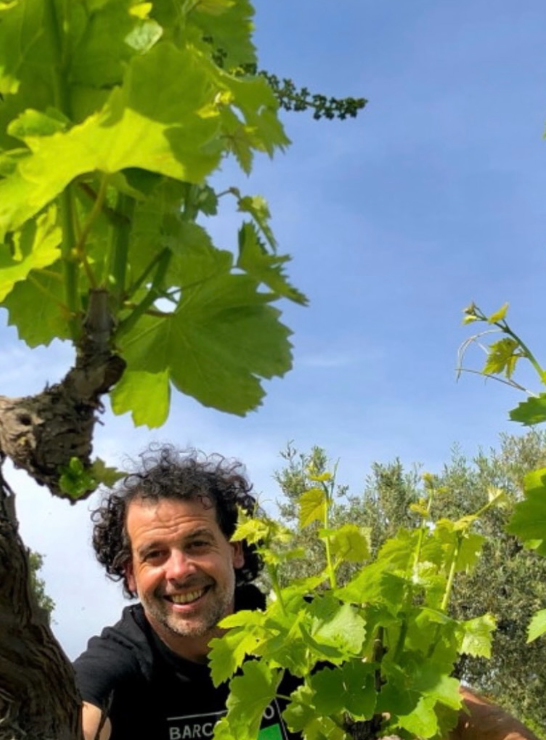
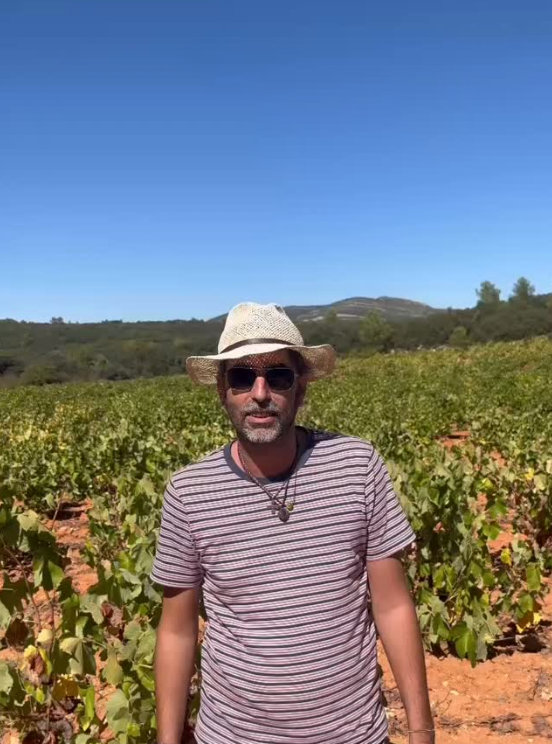
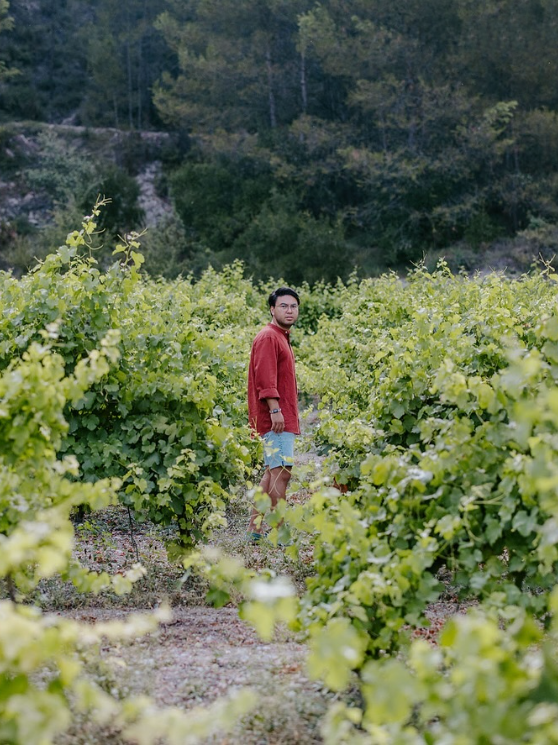
The Valencian Community is one of the oldest wine-growing territories of the western Mediterranean. The vine arrived with the Phoenicians and took root in a landscape that combines the coast's maritime influence with inland valleys and the mountain ranges marking the way into the peninsula's interior. The Terres dels Alforins region, the Vall del Clariano and the Benicadell massif today hold much of the natural and biodynamic viticulture projects that interest Terroir Radical the most.
What sets this territory apart is, above all, its varietal heritage. Under centuries of conventional farming and mass replacement with international varieties, the landscape hid an almost-vanished genetic archive: Forcallada, the Tardana, Verdil, the Viognier, Mataró, among others. The writer and naturalist Antoni Josep Cavanilles already recorded it in 1797 in his Observaciones, documenting native Valencian varieties now in the process of recovery.
Native varieties aren't romanticism. They're viticultural technology adapted to hundreds of years of local climate, soil and labour. Recovering them is, today, a scientifically grounded response to climate change.
Dry-farmed bush-vine viticulture, which covers most of the area's old vineyards, is the growing system that has historically adapted best to Mediterranean drought. Vines that are 20, 40 or even 80 years old develop deep root systems that let them reach water reserves in lower soil layers, something young irrigated trellised vines can't do. This adaptation, built up over generations, is exactly what the viticulture of the future needs.
Every harvest today is shorter, earlier, harder
The Valencian Community is part of the Mediterranean areas identified as climate-change hotspots. Data from recent decades shows a clear trend: temperatures are rising, summer rainfall is falling, and the vine's growing cycle is shortening and moving earlier. Projections for the Spanish Mediterranean area indicate that Valencia's vineyard area has lost a 39% between 1986 and 2015 — partly in response to increasingly harsh conditions (Compés & Cervera, 2018).
For the Mediterranean area in general, recent IRTA studies (De Herralde et al., 2022) on the DO Penedès — climatically comparable to Valencian areas — show that the vine's growing cycle could shorten by up to a month as early as the 2030s, and that harvest dates could move forward by between 29 and 40 days compared with the reference period. Increasingly frequent tropical nights during ripening directly affect the grapes' acidity and aromas: when the minimum night-time temperature is high, malic acid breaks down and the tannins fail to ripen evenly.
1986–2015
by the 2030s
at risk by the end of the century
A recent study (van Leeuwen et al., 2024, cited in Ribalta Pizarro, 2025) estimates that 90% of the traditional producing regions of Spain, Italy, Greece and California are at risk of disappearing by the end of the century due to drought and more frequent heatwaves. The answer isn't massive irrigation or corrective winemaking technology. The answer is knowledge of terroir, adapted varieties, and a viticulture that works with the territory instead of against it.
Less vineyard, earlier harvests
Since 1980, the Valencian vineyard has shrunk dramatically due to European vine-pull schemes, sector restructuring and the lack of profitability in much of the inland regions. In the 1980s, the Valencian Community comfortably exceeded 90,000 hectares of vineyard; by 2015 it had already stabilised at 60,031 ha, and the latest reports from the Generalitat's Vineyard Register put it at 55,019 ha — an 8.3% loss in just one decade. The province of Valencia holds 81% of that, mostly in the Utiel-Requena region.
The drop in area has come with an even steeper drop in production due to successive droughts and heatwaves. The Valencian harvest today accounts for between 4% and 5% of Spain's wine: from around 2,500,000 hl a year in the 1980s —mostly aimed at bulk, high-alcohol wine— it has fallen to 1,327,000 hl in 2023/24 and 1,288,000 hl in 2024/25, both years marked by dry-farming water deficit. For 2026, a recovery of up to 25% is expected in key areas such as the DOP Valencia, which would bring volume back to around1,500,000 hl.
1980s → 2025
in the last decade
in the Valencian Community (2026)
The 2026 season was the earliest harvest in the history of the DO Valencia: picking began in early August in Clariano and the Alforins, up to 15 days ahead of the historical average, with the grapes in excellent health and quality rated as excellent despite the vines' heat stress.
In this scenario, the growth of organic vineyards —which in the Valencian Community already exceed 19,130 certified hectares in 2026— and the recovery of native varieties aren't symbolic gestures: they're the two levers that allow wine with real identity to keep being made in a climate that leaves less room every year. It's exactly the ground the producers we select work on.
The Mediterranean: a way of understanding the vine
When we talk about the Mediterranean as a wine-growing territory, we're not talking about a designation of origin or an administrative area. We're talking about a climate, a culture and an ancient relationship between the vine and human beings. The Mediterranean arc extends its influence from the south of the Iberian Peninsula to the coasts of Greece, Croatia, Lebanon or North Africa, taking in the wine regions of the French Midi, southern Italy and Sardinia.
What unites these very different places isn't just the climate — hot, dry summers, mild winters, breezes that regulate temperature — but a farming philosophy born of necessity. In lands where water has always been scarce, the vine has learned to survive. Old vines, local varieties, bush-vine pruning, ground cover: all these practices we associate today with natural wine are, in fact, the agricultural coding of centuries of adaptation to the land.
The Mediterranean is the first wine-growing area in the world to visibly experience the consequences of climate change. And it's also the one with the most tools to respond: varietal biodiversity, ancient growing systems and a wine culture that prioritises expressing the place over technical correction.
Mediterranean varietal biodiversity is, in this context, a strategic asset. Each native variety is the result of a natural and human selection adapted to a microclimate, a soil, a way of working. Losing them — as happened during the 20th century with the massive spread of international varieties — isn't an abstract cultural loss. It's a loss of resilience against a changing climate. Recovering this genetic heritage, carried out by bodies such as the IVIA in the Valencian Community or the El Encín Germplasm Bank nationally, is one of the most important scientific and agronomic efforts of the coming decades.
Terroir Radical works precisely at this intersection: producers who grow native varieties, dry-farmed, with minimal intervention, in Mediterranean territories with an identity of their own. Not because it's a trend, but because it's the most honest and scientifically coherent way to make wine in today's context.
Sources and references
- Cavanilles, A.J. (1797). Observaciones sobre la historia natural, geografía, agricultura, población y frutos del Reyno de Valencia. Madrid: Imprenta Real.
- Compés López, R. & Cervera Ferrer, F.J. (2018). Mediterranean viticulture in Spain facing climate change. In El sector vitivinícola frente al desafío del cambio climático. Cajamar Caja Rural.
- De Herralde, F., Funes, I., Sánchez, E., Aranda, X., Savé, R. & Comino, D. (2022). Report on water needs and availability for converting dry-farmed viticulture to irrigation under climate change. SECAREGVIN project. IRTA / Catalan Water Agency.
- Ribalta Pizarro, C.A. (2025). Agronomic management in a Mediterranean vineyard and its impact on oxidative stress and grape quality (Vitis vinifera L. cv. Merlot), in a context of global change. PhD thesis. University of Barcelona.
- Muñoz Organero, G. et al. (2016). Native grapevine varieties at risk of genetic erosion: characterisation and conservation. Instituto Madrileño de Investigación y Desarrollo Rural, Agrario y Alimentario (IMIDRA).
- Van Leeuwen, C. et al. (2024). Cited in Ribalta Pizarro (2025). Regions at risk from drought and heatwaves by the end of the 21st century.
- IVIA — Valencian Institute of Agrarian Research: ivia.gva.es
- Generalitat Valenciana — Regional Ministry of Agriculture (2023). Report on the wine sector. Vineyard Register. Portal Agrari GVA.
- CAECV — Organic Farming Committee of the Valencian Community (2026). Certified area statistics: caecv.com
- DO Valencia / Vinos de Valencia (2026). The earliest harvest in the history of the DO Valencia: vinovalencia.org. Press coverage: Las Provincias, València Plaza, El Periòdic (2026).