
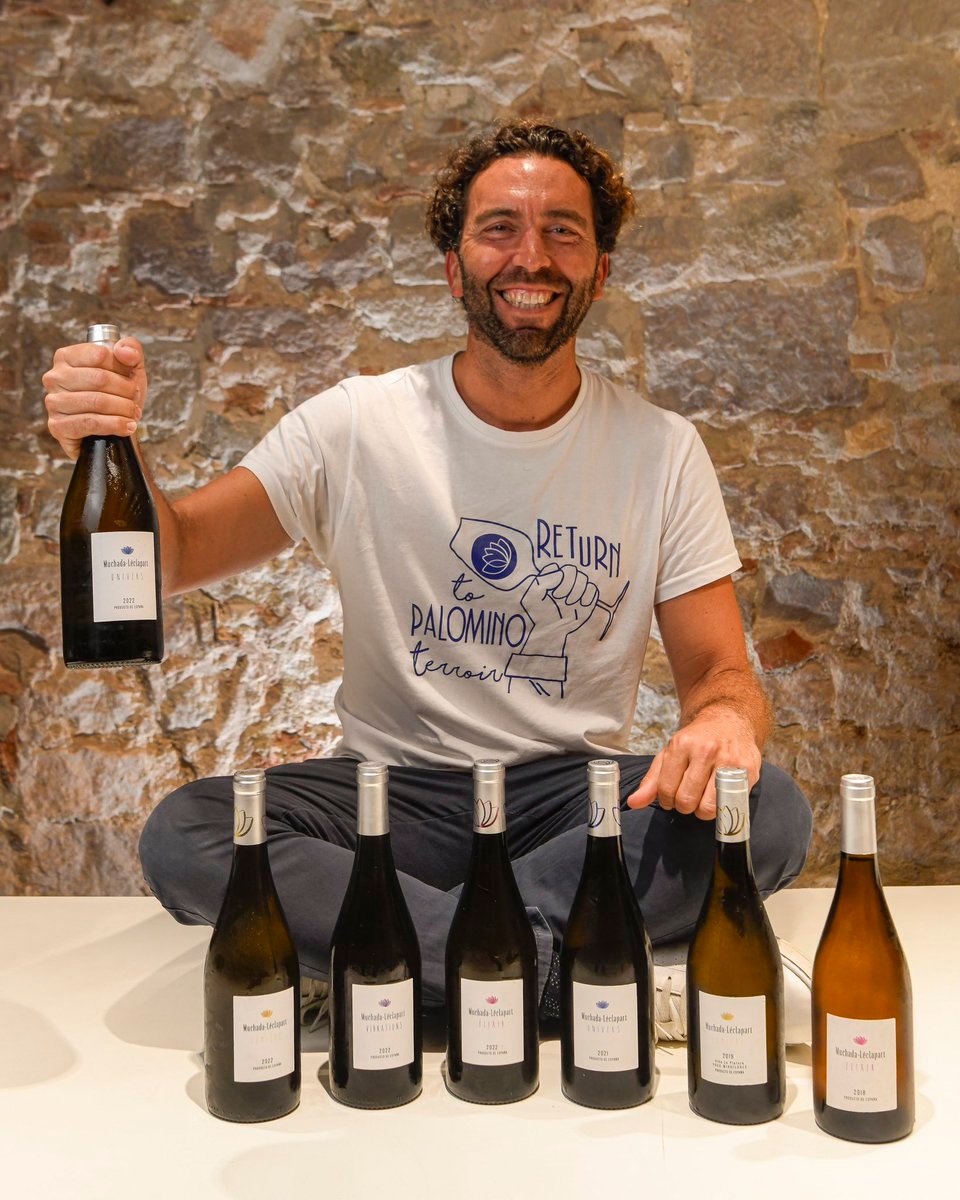
Muchada-LéclapartAlejandro Muchada
Alejandro Muchada —an architect turned grower— is the mind behind Muchada-Léclapart, a project born in 2016 in Sanlúcar de Barrameda with an unusual idea within the Marco de Jerez: making a white wine from old-vine Palomino Fino without flor veil and unfortified. The vineyards are in the pagos Miraflores (Sanlúcar) and Abulagar (Chipiona), farmed biodynamically on deep albariza soils, with a permanent Atlantic breeze. The project was born from the collaboration with David Léclapart, a vigneron from the biodynamic Champagne; since 2026, Alberto and Eduardo García (Bodegas Mauro) have joined as partners. The result is one of the most singular and acclaimed table whites in the Spanish scene: Lumière 2021 obtained 99 points from José Peñín.
Pago Miraflores (Sanlúcar de Barrameda) and Pago Abulagar (Chipiona), on the Atlantic edges of the Marco de Jerez. The albariza soils —white calcareous clay with high moisture retention— and the constant Atlantic sea breeze create unique conditions: slow ripening, lively acidities and an unmistakable saline minerality found in no other Spanish wine territory. The old Palomino Fino vines, planted between 1945 and 1965 by massal selection, grow bush-trained on deep, unirrigated soils.
- Farming certified Demeter biodynamic — all plots certified
- 5 hectares of old bush-trained Palomino Fino and Moscatel Romano vines in the pagos Miraflores and Abulagar
- Hand harvest, grape selection and whole-bunch pressing
- Gravity settling · spontaneous fermentation with native yeasts, no inoculation
- Without flor veil — the wine does not develop the protective veil of yeasts and remains a dry table wine; a key difference from conventional Jerez
- Ageing on lees for 11 months in enamelled steel tanks (Univers, Lumière) or used Bordeaux barrels (Élixir, Étoile, Vibrations)
- Fined with calcium bentonite · bottled unfiltered · free SO₂ 5–15 mg/l
- Univers — Biodynamic White Wine · 100% Palomino Fino · Miraflores Baja · enamelled steel tank · 4,000–6,000 bottles
- Lumière — Biodynamic White Wine · 100% Palomino Fino · La Platera · enamelled steel tank · 3,000–4,000 bottles · 99 pts Peñín (2021)
- Élixir — Biodynamic White Wine · 100% Moscatel Romano · Pago Abulagar (Chipiona) · Bordeaux barrel · 2,000–3,500 bottles
- Étoile — Biodynamic White Wine · 100% Palomino Fino · Miraflores Alta · Bordeaux barrel · 300–1,200 bottles
- Vibrations — Biodynamic White Wine · 100% Palomino Fino · Miraflores · maceration + Bordeaux barrel · 300–600 bottles
The Marco de Jerez is historically the territory of fino, manzanilla and amontillado —necessarily oxidative wines, always fortified with alcohol. Muchada-Léclapart does the opposite: it takes the same Palomino Fino that feeds the soleras of the big wineries and bottles it as a dry, unfortified white table wine. A radical rereading of a territory that has been producing wines in a set way for centuries. The result recalls, for its Atlantic salinity and minerality, the best natural whites of the ocean —but with its own unmistakable Marco identity: chalk, gunpowder, the breeze.
The collection at Terroir Radical
Univers
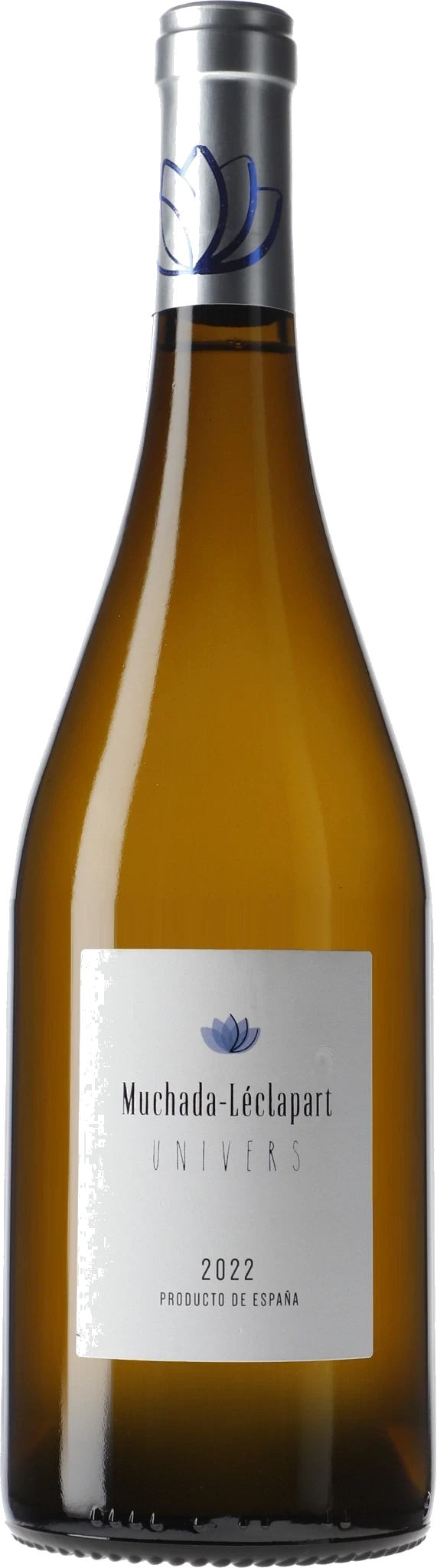
The entry to the Muchada-Léclapart cosmos. Fresh, saline and elegant: pure Palomino Fino without oak, expressing in its most direct form the Atlantic minerality of the albariza of the lower part of Pago Miraflores. The salinity and subtle hydrocarbons —aromatics typical of the great albariza pagos— appear clean and vibrant. The starting point to understand everything that follows.
Pale golden yellow, slightly cloudy from the minimal filtration. Fragrant, mineral nose: green apple, lime, white flowers, chamomile —and underneath, dry stone, chalk, the gunpowder of the albariza. A slight initial reductive note that opens with air. Lively, elegant palate; a fine creaminess from the lees that adds volume without heaviness. Vibrant, vertical, very fresh acidity. Long, very saline, clean finish that recalls the ocean. The perfect entry to the Muchada cosmos.
Lumière 99 pts Peñín
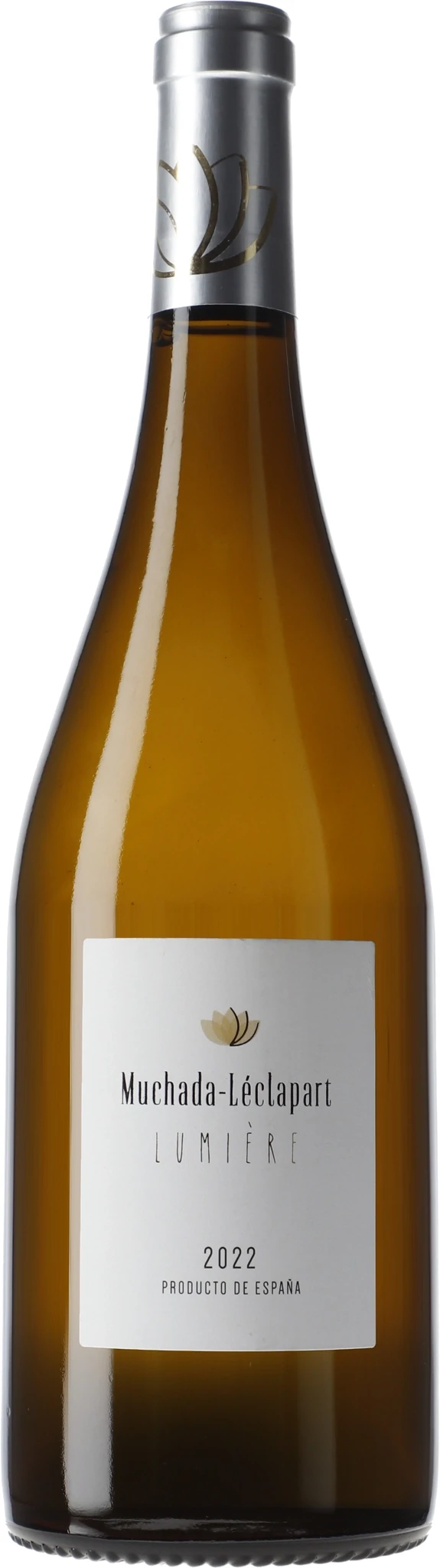
The project's emblem wine and Muchada-Léclapart's reference white. Balance and salinity, the subtle liveliness of Palomino taken to its maximum expression. La Platera —a plot with calcareous subsoil of closed tosca at two metres deep— gives a complexity and harmony that make it unique: volume, floral notes, gunpowder and fallow straw, refreshing acidity. José Peñín gave it 99 points for the 2021 vintage; Luis Gutiérrez (Parker) gave the 2022 95+ for its 'purity, elegance and subtlety'.
Slightly golden straw yellow, clear and bright. High-intensity nose: ripe apple, dried flowers, infused herbs —and underneath, live stone, chalk, the flint of the albariza. Fine cabinetmaking notes from old-oak ageing. On the palate it is sumptuous and enveloping, with a silky texture that fills without overloading. Vibrant but perfectly integrated acidity. Long, deeply saline finish, with the unmistakable mark of the Atlantic Ocean and the gypsum soil. The pasto white that changed everything.
Élixir 96 pts Suckling
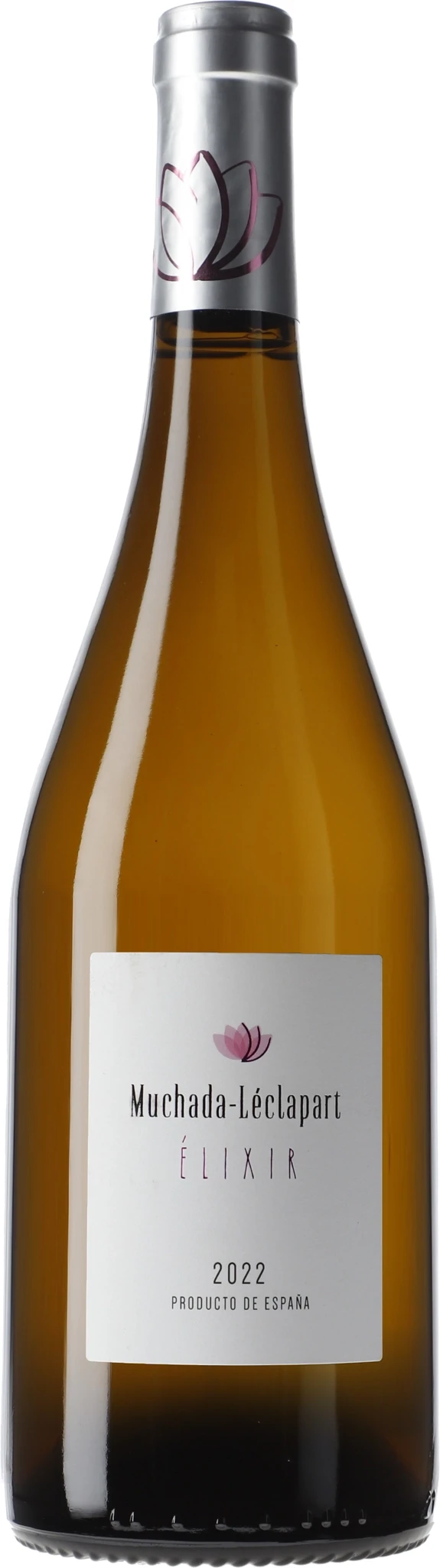
The most delicate wine in the collection: feminine, floral and reserved, with a masterful tension between nose and palate. The Moscatel Romano from the old vines of Abulagar —sand and clay soils, far humbler than the albarizas— expresses orange blossom, brine and a marine minerality that contrasts with the floral character of the grape. James Suckling has placed it among the 100 best Spanish wines (96 points, 2025).
Straw yellow with pale golden reflections, unfiltered. Very perfumed, feminine nose: orange blossom, citrus peel, peach, ginger —and underneath, a marine background of brine, iodine and sea salt. Sand-soil Moscatel and albariza Palomino in unexpected dialogue. Completely dry on the palate, with a tension and energy that break all the moulds of the grape. Medium, round body. Vibrant acidity that balances the perfume. Long, savoury, very saline finish. The perfume of life.
Étoile
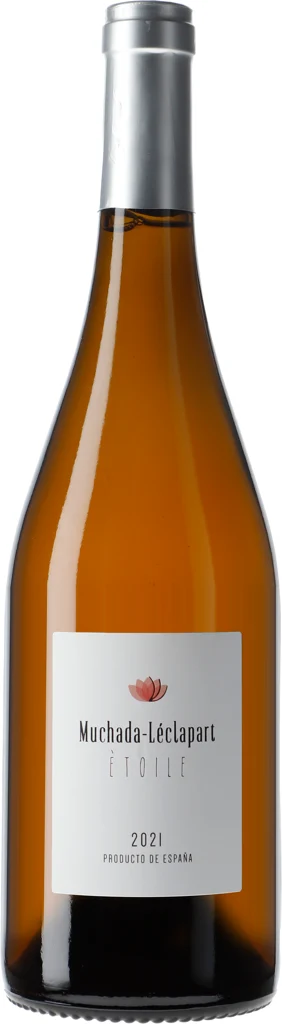
The wine of memory. Étoile is the point at which Muchada-Léclapart makes a concession to the territory it comes from: dry, saline and elegant, with a character that recalls Sherry without being it. Vinification in a Manzanilla butt or Bordeaux barrel (depending on the vintage) gives it a quiet memory of the Marco de Jerez tradition without renouncing its path as a free table wine. Very limited production: between 300 and 1,200 bottles per vintage.
Bright yellow, with golden reflections more marked than Lumière; the imprint of old Manzanilla butts and time. Powerful, complex nose: ripe apple, pear, dried flowers, wild herbs, an aniseed touch —and then what surprises: soft toasted notes, dried apricots, orange peel, a subtle resonance of the classic generosos of the Marco. On the palate it is dry, glyceric and structured, with a silky, succulent texture. Acidity integrated as a backbone. Very long, lively, eminently saline, chalky and mineral finish. The wine of memory: Muchada's homage to the ancient landscape of Miraflores.
Vibrations
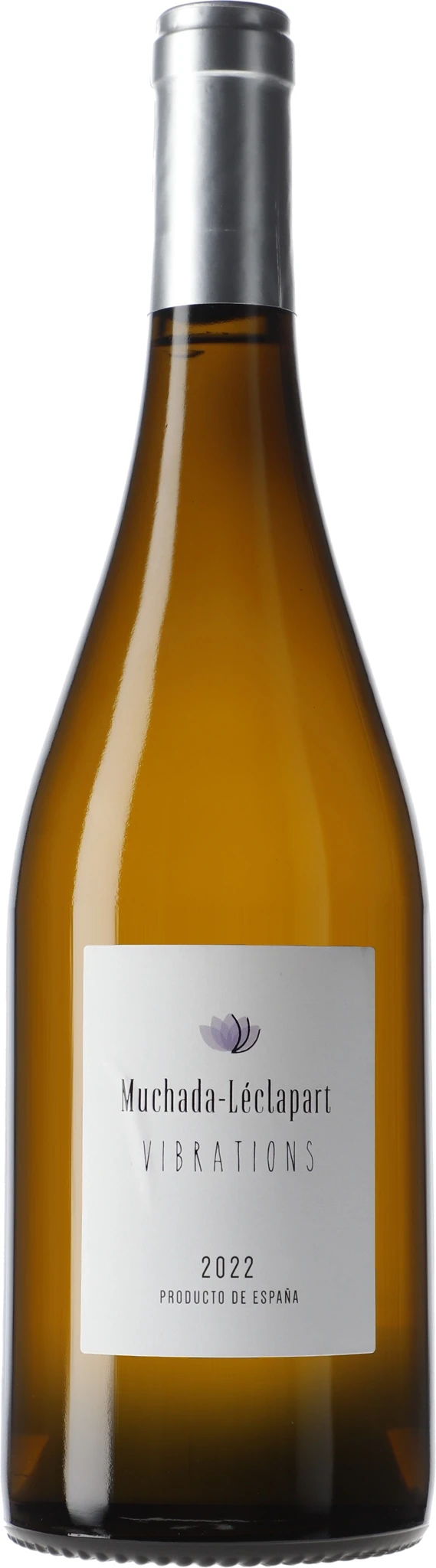
The wine of total complexity. Vibrations is Muchada-Léclapart's statement of principles at its highest range: complex, tropical, spicy, but never losing the salinity and elegance of the albarizas. The five-day maceration and barrel ageing give unusual body and structure in a Palomino Fino. The Miraflores Alta plot, recovered by Muchada from a state of abandonment, has the deepest soils and the most prized exposures of the pago. Very scarce production: it never exceeds 600 bottles.
Intense golden yellow, amber, slightly cloudy; the colour of a wine that has spent 5 days on its skins. Powerful, expressive nose: apricot, peach, orange peel, white flowers —and with aeration, spices, dried fruit, an echo of the noble oxidation of the amontillados. On the palate it is the most complete in the catalogue: dry, of great volume and texture, with a light structure of fine tannins that will surprise anyone not expecting tannins in a white. Vibrant, bright acidity that guides the wine towards a long, savoury, saline, elegant finish. Muchada's meditative moment.
Editorial note
Muchada-Léclapart represents something that rarely happens in Spanish wine: a radical revision of a territory from within. You don't have to go to France or northern Italy to understand that white table wine is a legitimate —and exciting— way of expressing a place. The Palomino of the Sanlúcar albarizas and the Moscatel of Abulagar were already saying it, but no one had listened to them in this way until Ale Muchada and David Léclapart decided to in 2016. That an architect should be the first to read the landscape differently is not so surprising. What is surprising is the result: a biodynamic-minded white table wine that has turned the international gaze on the Marco de Jerez upside down. Lumière is now one of the reference wines of the Guía Peñín, Parker and Noble Rot. And it has barely begun.
— Terroir Radical