
F. SchatzFinca Sanguijuela
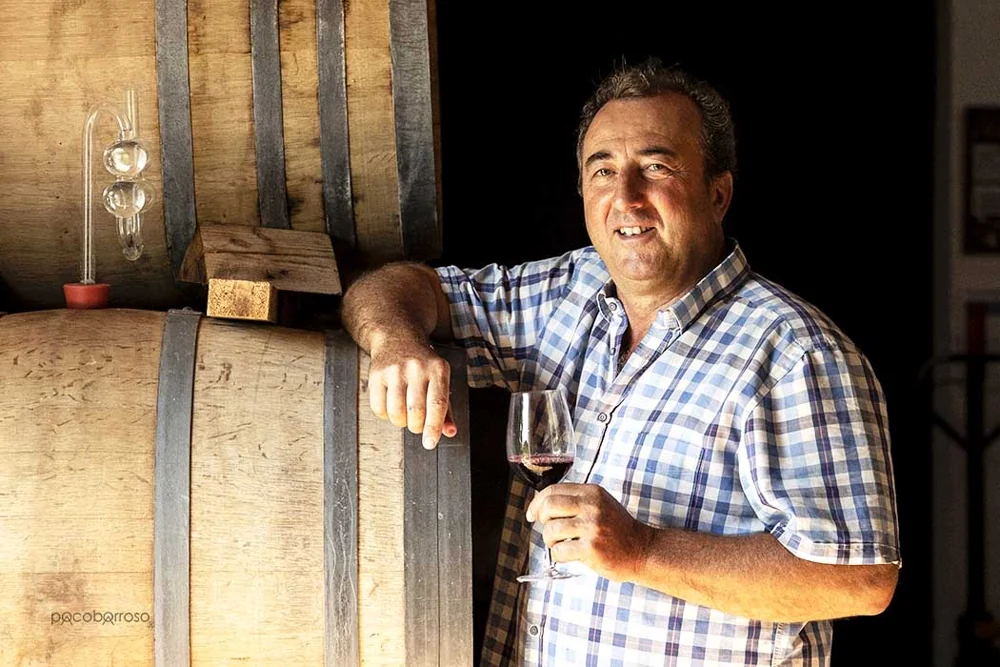
Friedrich Schatz, from a German winegrowing family since 1641, chose Ronda in 1982 to make wine. At Finca Sanguijuela he makes six biodynamic, natural wines from his own vineyard grapes, at about 700 metres above sea level.
At Terroir Radical he arrives with his six wines, which you can buy separately or in the SCHATZ Collection, a wooden box with all six.
From Korb to the Serranía de Ronda
The Schatz family comes from South Tyrol and settled in Korb (Baden-Württemberg, Germany), where it has been in winegrowing since 1641. At 18, in 1982, Friedrich knew he wanted to be a winegrower, but not in Germany: he chose Ronda, in the heart of Andalusia, an area already cultivated by the Iberians and the Romans in the ancient city of Acinipo.
He found the estate and the house, Finca Sanguijuela, in the Sierra de la Sanguijuela: the initials of Finca and Federico coincide, hence the winery logo, FS. When he arrived, Ronda was not yet a classified area for planting vines; trials with different varieties and the later support of the Regulatory Council made the project possible.
The producer cites 90 points in Guía Peñín and 93 in Akatavinos (Finca Sanguijuela 2009/2010) and gold medals at Cuvée Ostrava (2017, 2020 and 2022). The article "Pioneros" in Guía Peñín (March 2024) lists him among the pioneers of Spanish wine.
All of this information comes from the producer and his documentation.
A mountain vineyard between three ranges
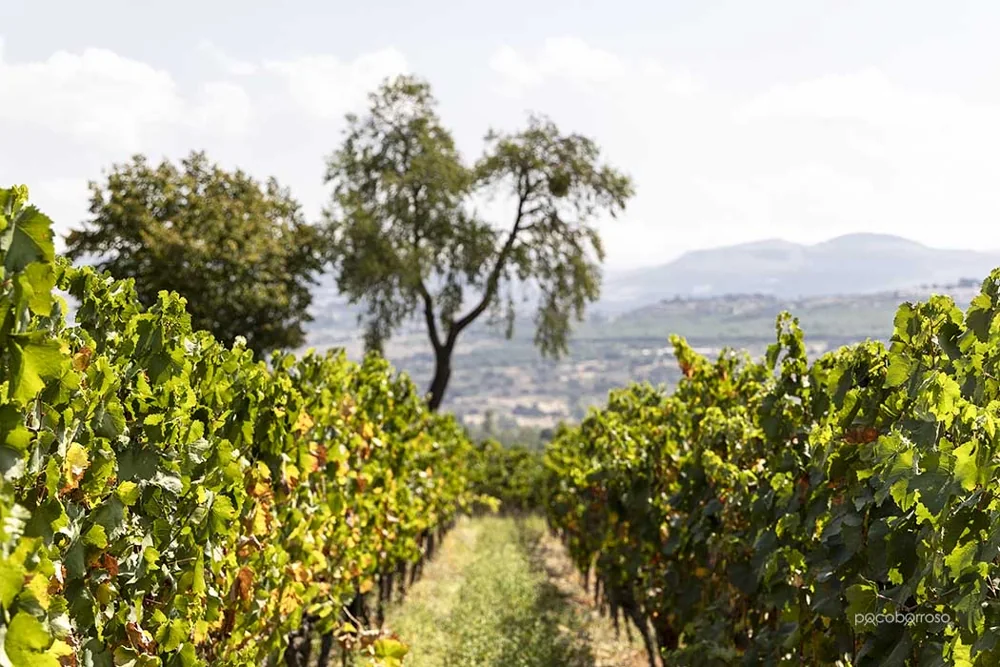
- 3 hectares of his own at Finca Sanguijuela, with 9 grape varieties.
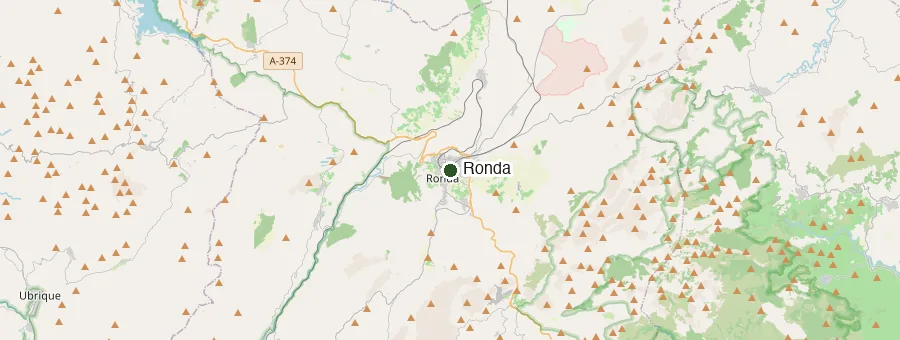
- About 700 m above sea level, some 50 km from Africa, 40 from the Mediterranean and 80 from the Atlantic, between three mountain ranges and nature reserves.
- Up to 30 °C of daily temperature swing: cool nights favour ripening with high natural acidity, according to the producer.
- Double Guyot training on trellises, 5,000 vines per hectare, with a cover crop of native grasses and legumes and a small, light tractor.
- Appellation: Sierras de Málaga, Serranía de Ronda sub-zone.
- Biodynamic and organic vineyard: only sulphur and biodynamic preparations (500-508); 100% hand harvest.
- Cellar: mechanical processes only: destemming, about a week of fermentation in open vats with hand punch-downs, gentle pressing in a vertical press and malolactic in steel.
- Ageing: 5 to 12 months in French, Slovenian or American oak barrels, new and used, on fine lees with bâtonnage; the reds then spend years in bottle.
- Sulphites: the label says "no added sulphites" (only the natural ones). The lab reports (Agrovin) supplied by the producer give total SO₂ below 10 mg/L in five wines and 11 mg/L in the 2025 Chardonnay.
- Certification: organic (CAAE, EU Regulation 2018/848, valid until 15-01-2027). They practise biodynamics in all six wines; the certificate they have given us is the organic one.
- They are wines for ageing: barrel ageing and years in bottle. According to the producer, the reds can age for 20 to 25 years and the white and rosé for 10 to 15.
- You can taste the wood: 5 to 12 months in barrel, new and used, and years in bottle: it is part of his style. They are at TR because they are biodynamic, natural wines with no added sulphites, as the producer describes them.
- Small quantities: between 700 and 5,200 bottles per wine.
- Separately or in the box: the six wines can be bought by the bottle or in the SCHATZ Collection, a wooden box with all six.
Buy the SCHATZ Collection
SCHATZ Collection
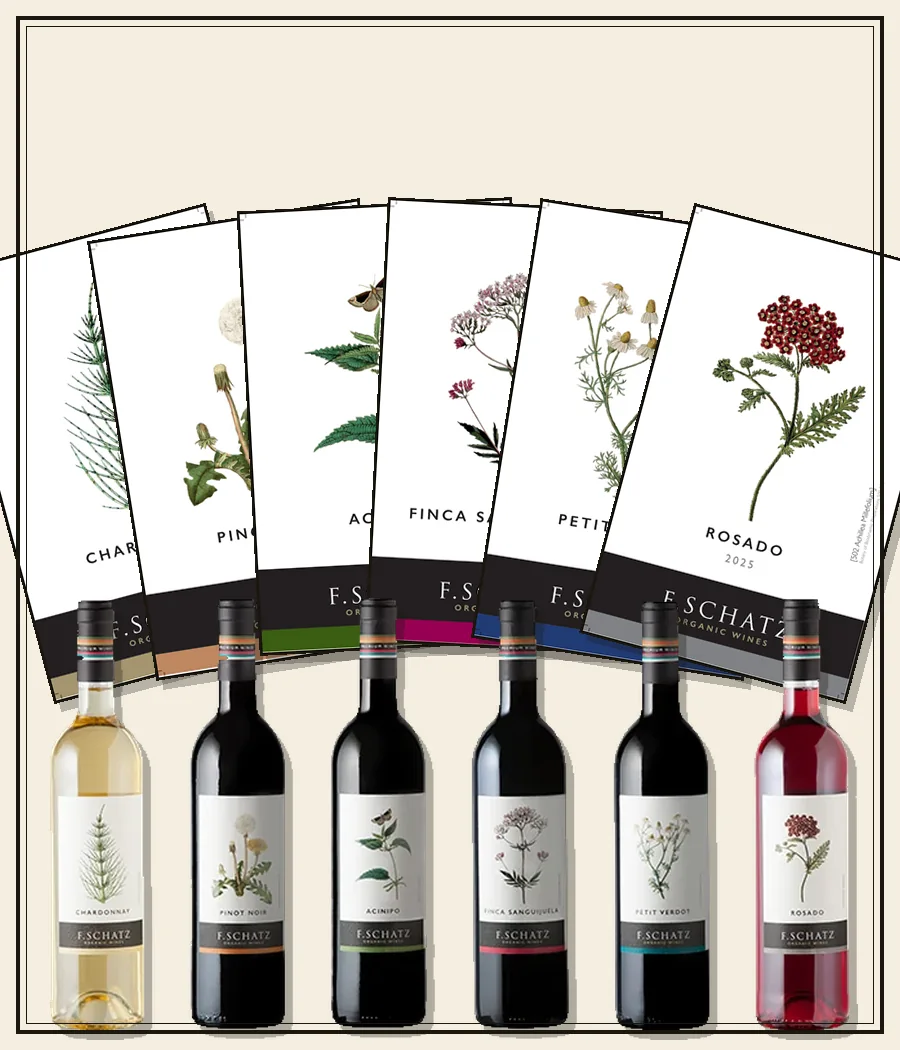
The wines in the box
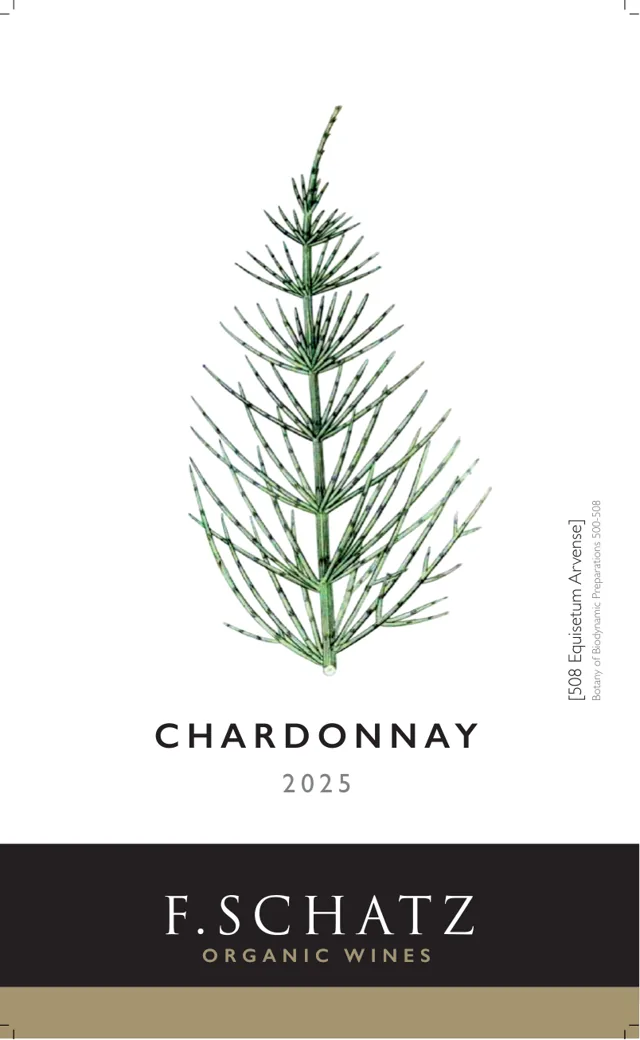
Chardonnay 2025
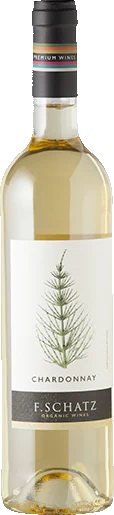
Winery note
Colour. Bright straw yellow.
Nose. A striking, characteristic aroma of jasmine and white flowers, with notes of subtropical fruit.
Palate. Deeply harmonious, with an intense mineral acidity. A persistent finish of subtropical fruit (lychee, mango, kiwi and banana).


Pairing suggested by TR (not from the producer):


Agrovin laboratory report no. 034675/A, tested on 03/10/2025, supplied by the producer. The values refer to the sample received that day.
Later report (035022, 19/11/2025): L-malic acid 0.19 g/L · L-lactic acid 0.57 g/L
Climatology of the vintage
January was rather wet (79 litres), although temperatures remained relatively mild. February was drier, though it brought several frosts. During the first three weeks of March, however, it rained heavily every day, with a total of 387 litres falling. Budburst began on 16 March, and on the 22nd and 23rd there was snowfall in the mountains; fortunately, this did not affect our already emerging buds. Vegetative growth was rapid, and flowering began on 19 May and concluded on 1 June. From 25 May onwards, the first heatwave of the season set in, lasting six days. Combined with the prevailing humidity and occasional rainfall, this created highly favourable conditions for fungal diseases such as powdery mildew, and particularly downy mildew. Nevertheless, thanks to careful manual work within the canopy and the application of organic biodynamic treatments, we were able to control and ultimately eliminate them. Compared with other wine-growing regions such as Jerez, Huelva and Rioja, where vineyards suffered severe attacks during flowering, in some cases resulting in losses of up to 100%, our vineyards were only minimally affected. Rainfall ceased on 10 June. The summer then unfolded with four prolonged heatwaves, which accelerated the ripening process. Veraison began on 20 July, followed by a rapid maturation period; just three weeks later, on 12 August, we began the harvest. All varieties ripened in close succession, requiring us to work at a particularly swift pace. Interestingly, this year we started the harvest with Lemberger, something that had never happened before, and, as usual, we concluded with Petit Verdot on 2 September. November proved to be quite wet, with 164 litres of rainfall recorded. The first frosts arrived on 26 November, allowing the vines ample time for proper bud maturation and the accumulation of reserves. This augurs very well for 2026, promising a strong budburst and, most likely, a plentiful harvest.
Text by the producer.
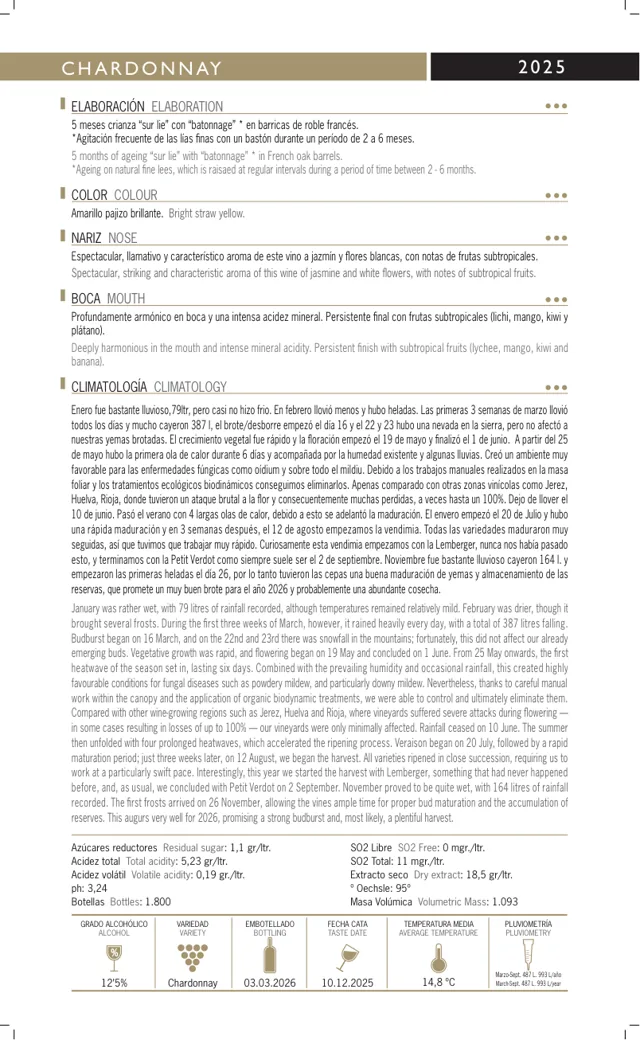
Producer's original technical sheet (click to enlarge).
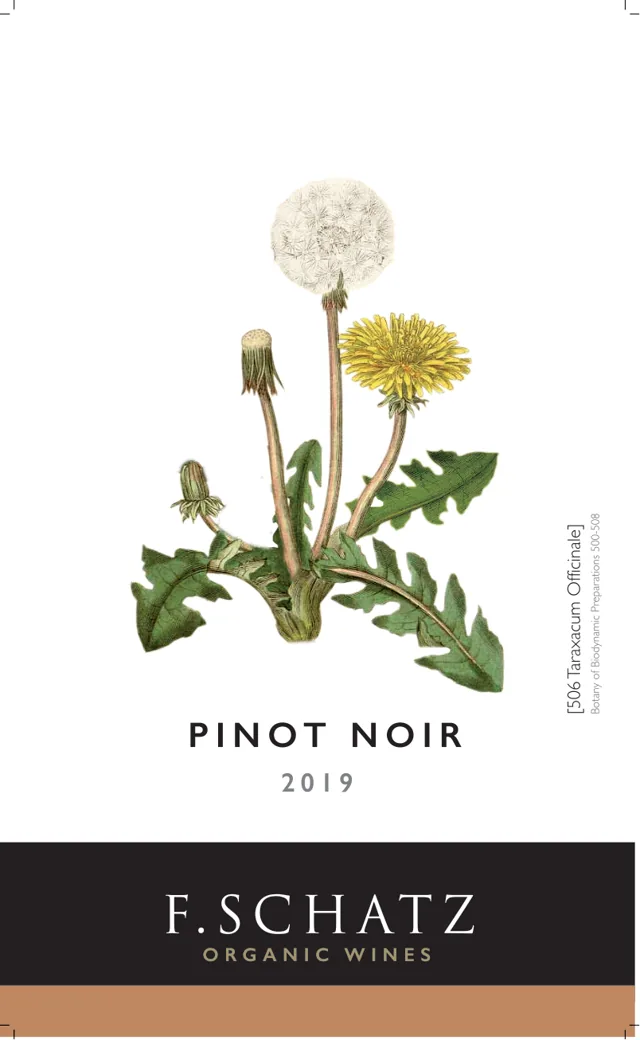
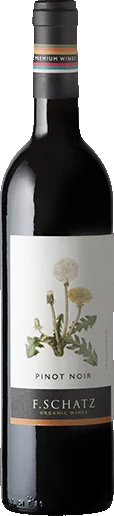
Pinot Noir 2019
Pairing suggested by TR (not from the producer):


Agrovin laboratory report no. 023982/A, tested on 18/10/2019, supplied by the producer. The values refer to the sample received that day.

Producer's original technical sheet (click to enlarge).
Acinipo 2023
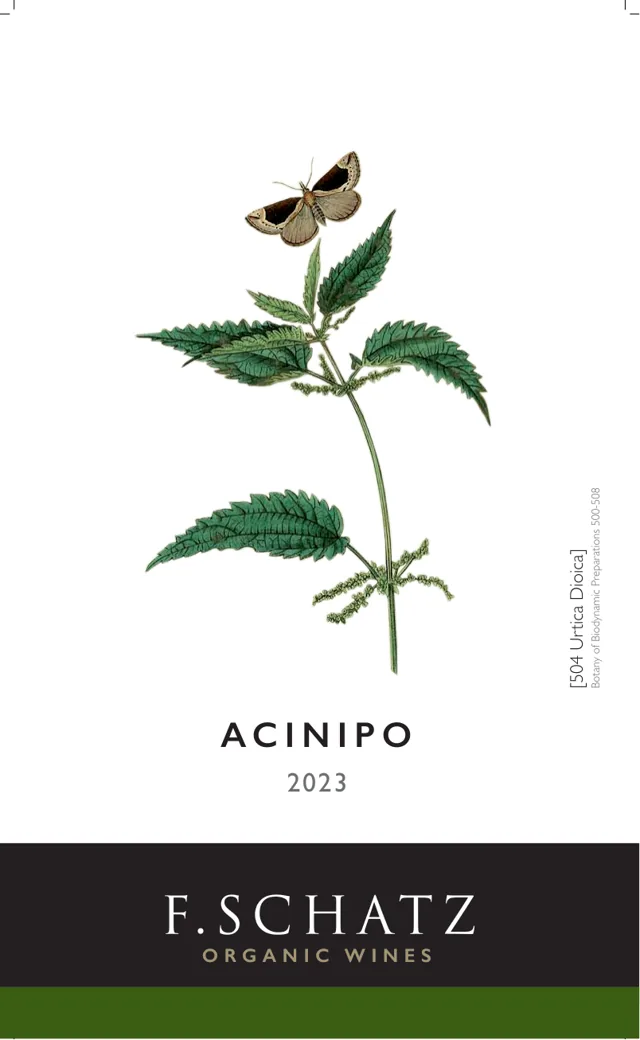
Winery note
Colour. Dark cherry red.
Nose. Intense aromas of red fruit and aromatic scrubland plants (bay laurel, thyme).
Palate. Perfect harmony led by red fruit, scrubland and coffee, with a powerful, balanced acidity and a lingering finish.


Pairing suggested by TR (not from the producer):


Agrovin laboratory report no. 030704, tested on 29/08/2023, supplied by the producer. The values refer to the sample received that day.
Later report (030825, 21/09/2023): L-malic acid < 0.12 g/L · L-lactic acid 0.72 g/L · pH 3.40 · Alcohol by volume 12.37 % vol. · Free SO₂ < 10 mg/L · Total SO₂ < 10 mg/L
Climatology of the vintage
It was a very dry winter: it only rained 17 l in January, 20 l in February and 17 l in March, nothing in April, and it was not very cold either; temperatures had barely dropped below 0 ºC. Therefore, flowering started very early at the end of April and finished quickly in the first week of May. Luckily it rained 38 l in May and 49 l in June, which revived plant growth. There was even hail on 3 June (1 l), but without causing damage. In summer there were 3 heat waves of 10 days, with daytime temperatures of up to 40 ºC, when the normal has always been 1-2 heat waves of about 3 days. Veraison began on 13 July and the harvest on 3 August, and ended on 20 August. It was the earliest and fastest harvest we have known so far in Ronda. However, it was a harvest of very good quality: thanks to the late rains in May and June there was very good and harmonious phenolic ripening and also good quantity. Only in two varieties, curiously late ones (Cabernet Sauvignon and Petit Verdot), was there somewhat less. The first small rain after the summer began in September, but with very little water in October, November and December (84 l in total over these months). So we found ourselves with a year of extreme drought and high temperatures. But thanks to the natural management of our vineyards, they gave a very positive response in quality and quantity and, surprisingly, very moderate wines in alcohol.
Text by the producer.
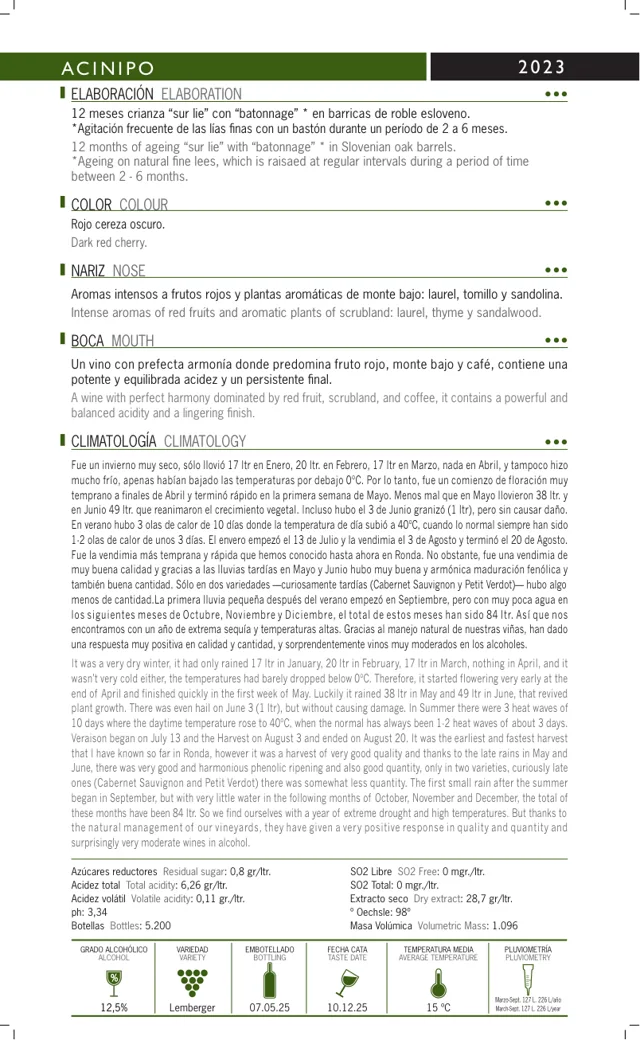
Producer's original technical sheet (click to enlarge).
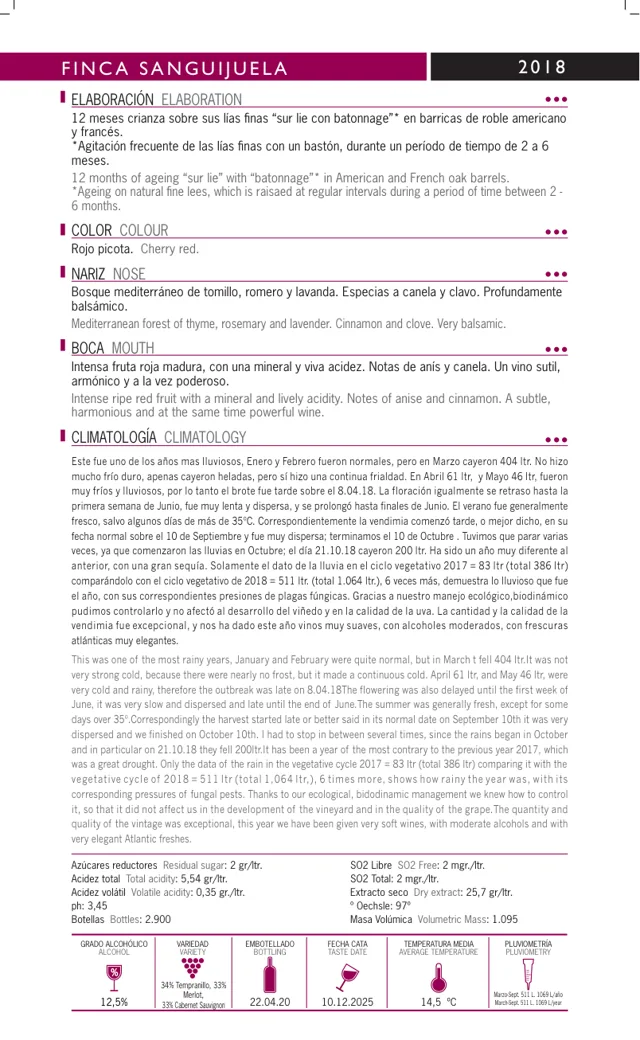
Finca Sanguijuela 2018
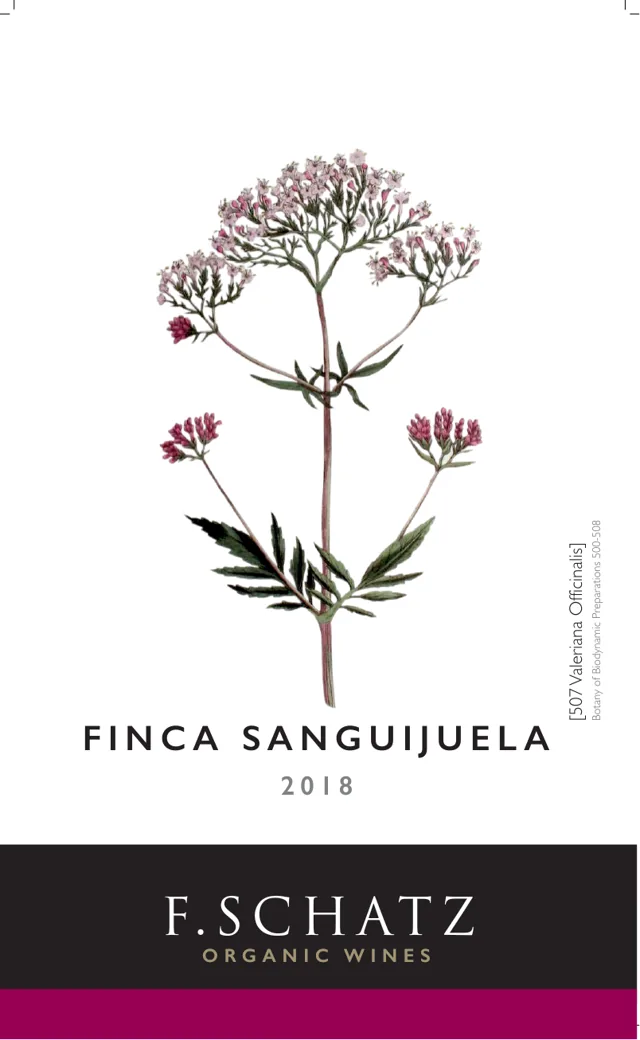
Winery note
Colour. Cherry red (picota).
Nose. Mediterranean forest of thyme, rosemary and lavender; cinnamon and clove; deeply balsamic.
Palate. Intense ripe red fruit with a mineral, lively acidity; notes of anise and cinnamon. Subtle, harmonious and powerful at the same time.

Pairing suggested by TR (not from the producer):

Agrovin laboratory report no. 021890, tested on 29/10/2018, supplied by the producer. The values refer to the sample received that day.
Climatology of the vintage
This was one of the rainiest years. January and February were quite normal, but 404 l fell in March. There was no hard cold, there were nearly no frosts, but it was continuously chilly. April (61 l) and May (46 l) were very cold and rainy, so budburst was late, around 8 April 2018. Flowering was also delayed until the first week of June; it was very slow and scattered and lasted until the end of June. The summer was generally cool, except for some days over 35 ºC. Correspondingly, the harvest started late or, better said, on its normal date, around 10 September, and it was very scattered: we finished on 10 October. We had to stop several times because the rains began in October; on 21 October 2018, 200 l fell. It was a year very different from the previous one, which was a year of great drought. Only the rain of the 2017 vegetative cycle was 83 l (total 386 l), compared with the 511 l of the 2018 vegetative cycle (total 1,064 l), six times more, which shows how rainy the year was, with its corresponding pressure from fungal pests. Thanks to our organic, biodynamic management we were able to control it, and it did not affect the development of the vineyard or the quality of the grapes. The quantity and quality of the vintage were exceptional, and this year gave us very soft wines, with moderate alcohol and very elegant Atlantic freshness.
Text by the producer.
Producer's original technical sheet (click to enlarge).
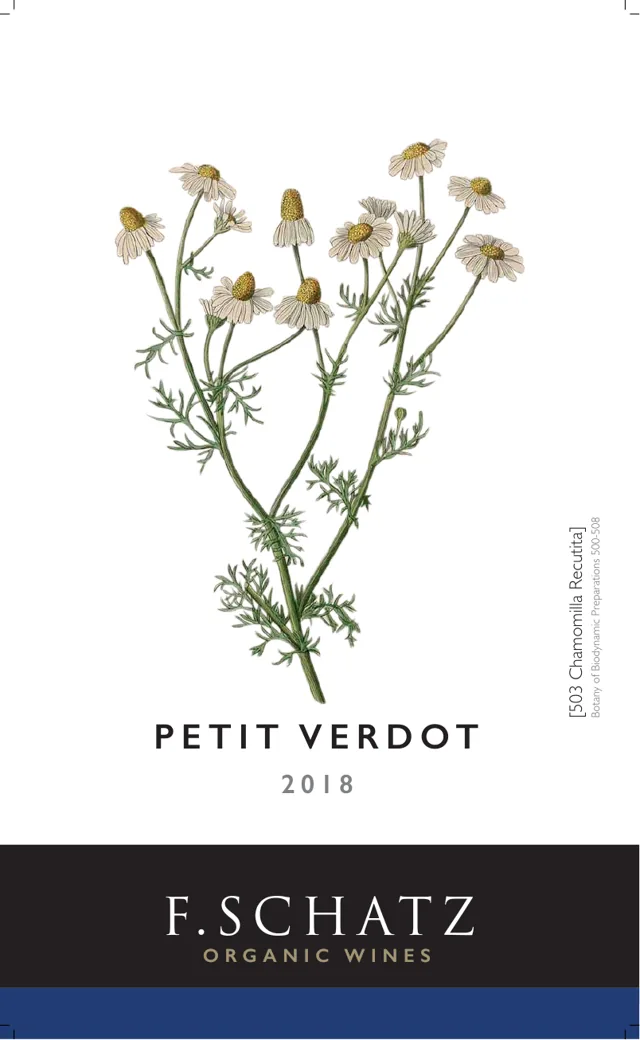
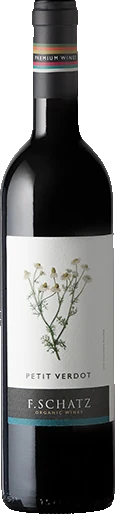
Petit Verdot 2018
Winery note
Colour. Purple red.
Nose. Marked balsamic aromas of eucalyptus, apothecary, chocolate and mint.
Palate. A harmonious chocolate and currant flavour; a very Atlantic, fresh wine with fantastic acidity.

Pairing suggested by TR (not from the producer):
Agrovin laboratory report no. 022006, tested on 19/11/2018, supplied by the producer. The values refer to the sample received that day.
Climatology of the vintage
This was one of the rainiest years. January and February were quite normal, but 404 l fell in March. There was no hard cold, there were nearly no frosts, but it was continuously chilly. April (61 l) and May (46 l) were very cold and rainy, so budburst was late, around 8 April 2018. Flowering was also delayed until the first week of June; it was very slow and scattered and lasted until the end of June. The summer was generally cool, except for some days over 35 ºC. Correspondingly, the harvest started late or, better said, on its normal date, around 10 September, and it was very scattered: we finished on 10 October. We had to stop several times because the rains began in October; on 21 October 2018, 200 l fell. It was a year very different from the previous one, which was a year of great drought. Only the rain of the 2017 vegetative cycle was 83 l (total 386 l), compared with the 511 l of the 2018 vegetative cycle (total 1,064 l), six times more, which shows how rainy the year was, with its corresponding pressure from fungal pests. Thanks to our organic, biodynamic management we were able to control it, and it did not affect the development of the vineyard or the quality of the grapes. The quantity and quality of the vintage were exceptional, and this year gave us very soft wines, with moderate alcohol and very elegant Atlantic freshness.
Text by the producer.

Producer's original technical sheet (click to enlarge).
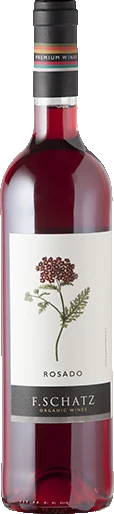
Rosado 2025

Winery note
Colour. Light cherry.
Nose. A pleasant aroma of red fruit (cherries and currants), with a base note that leads to muscat.
Palate. Balanced, with fresh-berry flavour and marked acidity; a persistent finish of red fruit and liquorice.

Pairing suggested by TR (not from the producer):


Agrovin laboratory report no. 034674/A, tested on 03/10/2025, supplied by the producer. The values refer to the sample received that day.
Later report (035023, 19/11/2025): L-malic acid < 0.12 g/L · L-lactic acid 0.56 g/L
Climatology of the vintage
January was rather wet (79 litres), although temperatures remained relatively mild. February was drier, though it brought several frosts. During the first three weeks of March, however, it rained heavily every day, with a total of 387 litres falling. Budburst began on 16 March, and on the 22nd and 23rd there was snowfall in the mountains; fortunately, this did not affect our already emerging buds. Vegetative growth was rapid, and flowering began on 19 May and concluded on 1 June. From 25 May onwards, the first heatwave of the season set in, lasting six days. Combined with the prevailing humidity and occasional rainfall, this created highly favourable conditions for fungal diseases such as powdery mildew, and particularly downy mildew. Nevertheless, thanks to careful manual work within the canopy and the application of organic biodynamic treatments, we were able to control and ultimately eliminate them. Compared with other wine-growing regions such as Jerez, Huelva and Rioja, where vineyards suffered severe attacks during flowering, in some cases resulting in losses of up to 100%, our vineyards were only minimally affected. Rainfall ceased on 10 June. The summer then unfolded with four prolonged heatwaves, which accelerated the ripening process. Veraison began on 20 July, followed by a rapid maturation period; just three weeks later, on 12 August, we began the harvest. All varieties ripened in close succession, requiring us to work at a particularly swift pace. Interestingly, this year we started the harvest with Lemberger, something that had never happened before, and, as usual, we concluded with Petit Verdot on 2 September. November proved to be quite wet, with 164 litres of rainfall recorded. The first frosts arrived on 26 November, allowing the vines ample time for proper bud maturation and the accumulation of reserves. This augurs very well for 2026, promising a strong budburst and, most likely, a plentiful harvest.
Text by the producer.

Producer's original technical sheet (click to enlarge).
Where they work
Editorial note
Friedrich Schatz has been making organic and biodynamic wine in Ronda for more than forty years, and he did so before it was common. His wines are biodynamic and natural, with no added sulphites, as he himself describes them, and that is why they are at Terroir Radical. We met him through Shukhrat Khakimov of SK Viticultores, because we share the same working philosophy: wines that speak of territory. He joins with his six wines, on their own or in a box: they are wines with long barrel ageing, made to keep. Everything we say here is what the producer and his documentation say; where there is a lab analysis, we say so.
— Terroir Radical