
In this article
The basics: vintage, producer and grape
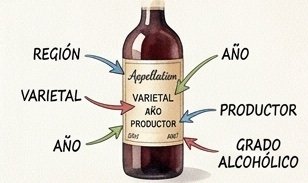
The vintage (the harvest year) matters especially in natural wine, because without corrections or stabilisers every year is different. A natural wine from a warm, dry year will have a very different profile from one from a cool, rainy year. Always check the vintage: if there is none, be suspicious.
The name of the producer, not the brand, is the key: in natural wine the winemaker is the craftsperson responsible for everything, from vineyard to bottle. If the label shows the brand but hides who made the wine, that is usually a warning sign. The grape (or grapes) shows the wine’s basic personality and helps you anticipate its style.
Certifications: organic, biodynamic and natural
A seal tells you who has checked what. Not all of them check the same thing, and none guarantees on its own that the wine is natural.
| Organic (EU) | Biodynamic (Demeter, Biodyvin) | “Natural” | |
|---|---|---|---|
| Who checks it | Authorised control bodies, under EU regulation (EU 2018/848). | Private certifiers. | Nobody in the EU: there is no legal definition. In France there are private charters, such as Vin Méthode Nature and AVN. |
| What it guarantees | Certified organic grapes and limits on additives and sulphites in the winery. | Biodynamic farming: its own preparations and a calendar of work. | Only what each seal’s charter sets. In Vin Méthode Nature: organic (or in-conversion) grapes, hand harvesting and native yeasts. |
| What it does not guarantee | That there are no added sulphites or that the wine is natural. | That the wine was made without additives in the winery. | That a wine meets anything just by saying “natural”: it is not a regulated term. |
A certification is a clue, not a verdict. Many great natural wines carry no seal, which is why at Terroir Radical we ask the producer and publish on each product page what they confirm.
Sulphites on the label: “contains sulphites” and “no added sulphites”
The statement “contains sulphites” is mandatory when a wine exceeds 10 mg/l of total sulphur dioxide (SO₂) (Regulation (EU) 1169/2011, Annex II). It only says that the threshold is exceeded: it does not say how much the wine contains. A wine with 15 mg/l and another with 140 mg/l carry the same phrase.
Almost all wines contain sulphites, even those to which none has been added, because yeast produces them during fermentation. That is why “contains sulphites” does not make a wine conventional. “No added sulphites” means the producer has not added SO₂ at any point in winemaking: the wine has only what forms naturally.
To know the figure, ask the producer for the total SO₂ in mg/l. Our guide to wine with no added sulphites explains the legal limits and how to read them.
What the label does not say (and the QR code)
Until 2023, wine was exempt from listing its ingredients on the label. Since 8 December 2023 that has changed: wines produced from that date must give their ingredients and nutritional value (Regulation (EU) 2021/2117).
But the full list may be provided electronically, for example with a QR code, and on the physical label it is enough to give the energy value and the allergens, such as “contains sulphites”. Wines produced before that date do not have to comply: the label need not tell you what they contain.
What to do: if there is a QR code, scan it. The practices and additives the rules allow are listed in Delegated Regulation (EU) 2019/934, and the list is long. The most reliable way to know how a wine was made is still to ask the producer or read their technical sheet.
How we choose wines at Terroir Radical: beyond the label
At Terroir Radical we do not settle for reading labels. Every wine in our catalogue has gone through a direct selection process: we know the producer, we have visited or researched the winery, we have tasted the wine in context and we have checked that the minimal-intervention philosophy is real, not a marketing strategy.
When you buy at Terroir Radical, you are not buying a label: you are buying the confidence that someone has done the hard work of checking that what it says is what is in the bottle. And if you have doubts about any wine in the catalogue, write to us: we will be glad to explain how it was made and who is behind it.
In short
- Vintage first — The first thing to check in a natural wine. Every year is different.
- Certification: a guide — Useful but not definitive. Many great natural wines carry no seal.
- Read sulphites properly — “No added sulphites” is not the same as “no sulphites”. The nuances matter.
- Check the QR — Since December 2023 the ingredient list may be there, not on the label.
Choose with confidence
We have read the labels, visited the wineries and tasted the wines so that you can choose with confidence.
Keep reading
- Wine with no added sulphites: myths, limits and labels
- Natural wine: what it is and where to buy it
- Orange wines
Sources: Regulation (EU) 2021/2117 · Regulation (EU) 1169/2011 · Delegated Regulation (EU) 2019/934 · Regulation (EU) 2018/848 · Decanter · Vin Méthode Nature · Raisin. Last reviewed: 4 November 2026.